Driving to Rocky Point – Is it Safe?
We get asked all the time if driving to Puerto Penasco is safe and the simple answer is yes! Thousands of tourists travel to this popular destination mostly without encountering any mishaps along the way.
The most common, safe and least expensive way to get to Rocky Point is by driving your own vehicle.
Safety Corridor
Puerto Penasco is located around 215 miles from central Phoenix and about 65 miles from the Arizona/Mexico border (Lukeville/Sonoyta). The stretch of highway from just pass the border (Lukeville) to Puerto Peñasco was designated as a “safety corridor” back in 2016. This means there should be bilingual signs, surveillance cameras and, during busy periods, greater law-enforcement presence, security checkpoints, and zero tolerance for drivers in violation of the state’s traffic laws.
Free Zone
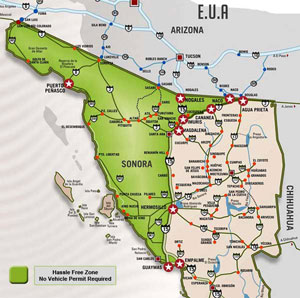
Highway 8 that connects the border town of Sonoyta, right at the border of Lukeville, Arizona, to Rocky Point is designated as a “Hassle Free” zone. What does this mean? Well, it means that certain permits and customs requirements are removed, and, most importantly, that you can temporarily drive your vehicle into Puerto Penasco without a permit.
Drive during daylight hours
We suggest driving during the daylight hours. There is more traffic on the road during this time and should anything happen (like a breakdown), you’ll be in a much better position to get help.
Do you need Mexican Insurance?
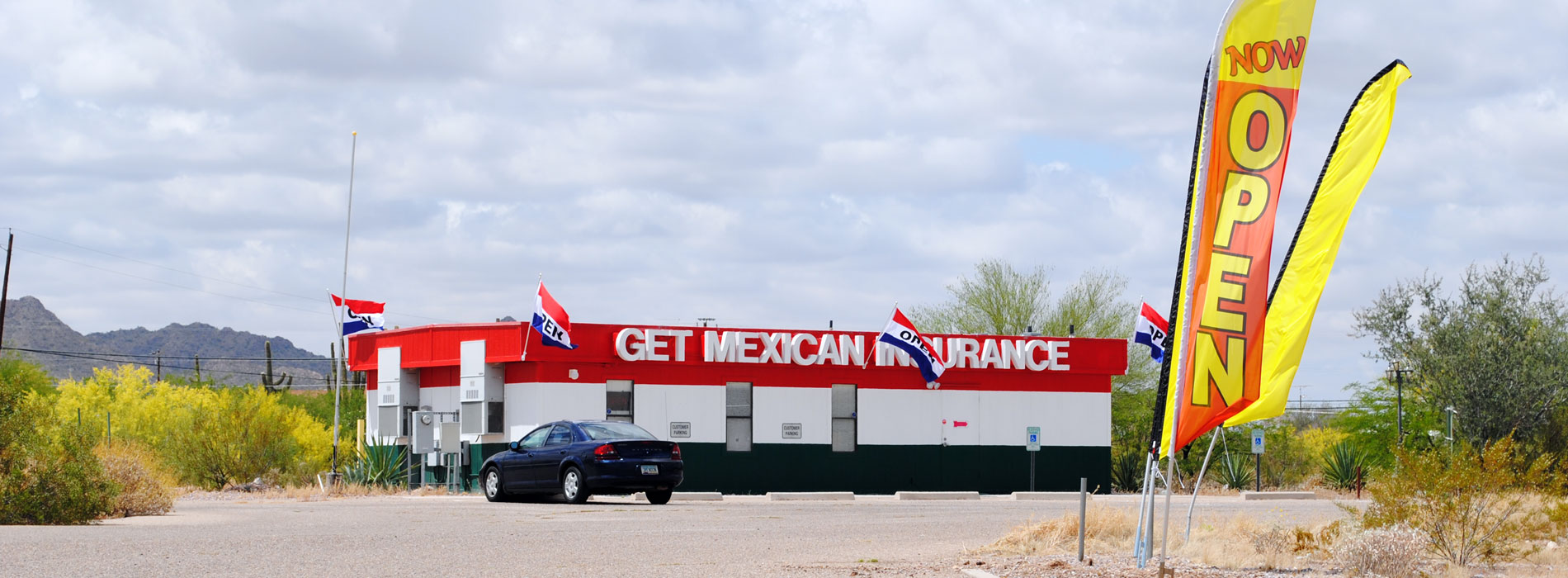
However, even though the law allows you to drive an American vehicle across the border and into Mexico without a permit, the law does require that all vehicles have Mexican Insurance. Most U.S. policies don’t cover incidents in Mexico.
The minimum insurance required is liability, but full coverage (liability, collision and theft) is strongly suggested. This insurance can be purchased just for the time you plan to stay in the area and is usually sold in 24-hour increments. The insurance needs to cover theft, accidents, medical payments and third-party damages. The cost of the insurance depends on the deductible you choose, the length of your stay, and the value of your vehicle.
You can purchase Mexican insurance online or in person at the many insurance places along the highway in Ajo or Lukeville.

What to do if you get in an auto accident
The most important thing to remember if for some unforeseen circumstance you need to use this insurance, is to file the claim while you are still in Mexico. Don’t wait until you are back in the U.S or your Mexican insurance won’t be valid!
When you purchase Mexican insurance, you get a set of instructions that include the number you need to contact in case of an accident or theft. Make sure you print these instructions and keep them with you, and not in the vehicle. First, you will have to call the local police; after that, you will need to call your insurance carrier.
In our experience, few people file theft claims while they are in Mexico, but accidents do happen on the roads. Drive safe and follow traffic rules. Remember to stay below the speed limit, specially in the border town of Sonoyta, since there is a strong police presence and fines are high. If you see a top sign, please stop, even if its location does not make sense!
Speed Limit
Mexico Highway 8 from Sonoyta to Puerto Penasco is a relatively smooth two lane highway. The speed limit is posted in kilometers and ranges from 40 to 90 kilometers per hour (25 to 55 mph). Don’t be surprised, however, if once you cross the town of Sonoyta most people drive above the speed limit. The reason being is most of the police are situated in the town of Sonoyta or Puerto Penasco.
If you get pulled over
If you do happen to get pulled over for speeding or other traffic violations in general, the officers are very friendly, but unfortunately they may ask you to settle the infraction in cash with them. We suggest you don’t hand cash to the officer but rather pay your fines at the police station. The officer will escort you to the police station where you can take care of the fine.
Other transportation options
You could also rent a car instead, but this option can be more costly and not all U.S. rental car companies allow their vehicles into Mexico. Be sure to ask!
Another option is to take a shuttle, but again, this option could also be more demanding on your wallet and you won’t have a vehicle in Mexico. Taxis can be pricey as well.
Here are some suggestions for rental car and shuttle companies.
Throughout the years various airline companies have tried to offer flights from a couple of U.S. major cities to Puerto Peñasco but so far all have been unsuccessful. For most visitors, when comparing the cost of flying versus driving, driving has won by far, at least until now.
Border wait times
Expect long lines at the border during peak season, especially on the weekends. The US border is open daily from 6am to 8pm. During busy times it is not uncommon to have 2 to 3 hour long waits, so plan accordingly!